

A Study That Changed How We Think About Studying
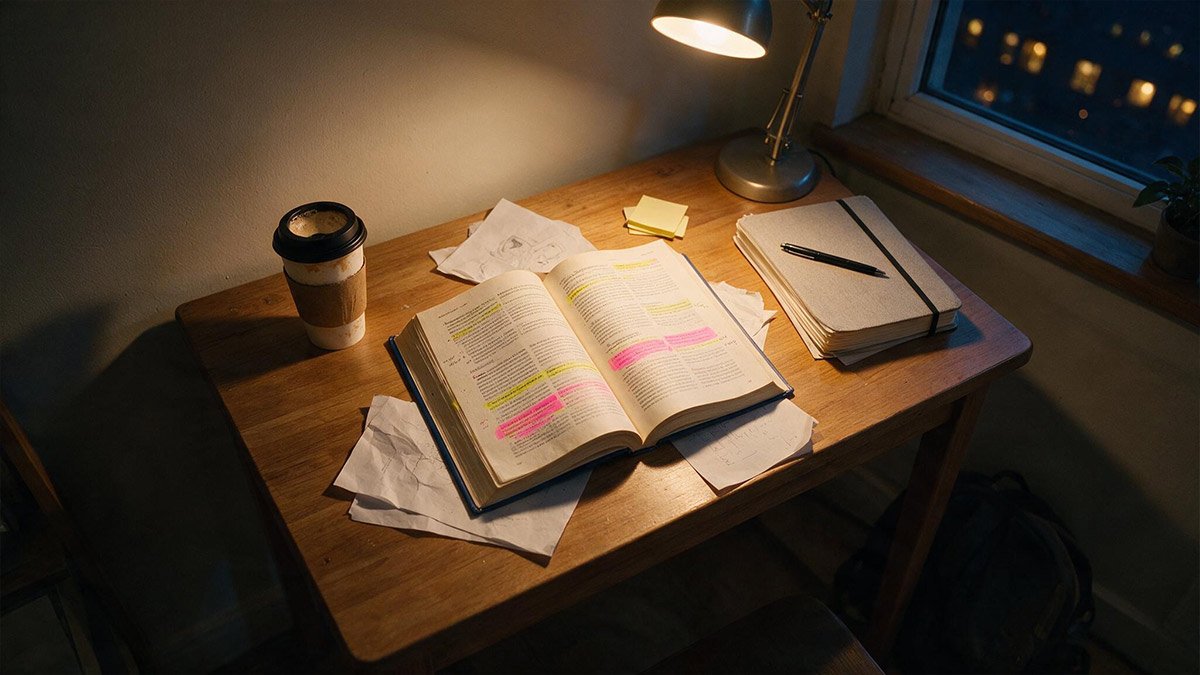
In 2013, cognitive scientist John Dunlosky and his team did something no one had really done before at that scale — they pulled together decades of learning research and ranked ten of the most common study techniques by how well they actually work. The results, published in Psychological Science in the Public Interest, were uncomfortable reading for most students.
Here’s what they found, in short:
- Low-utility techniques (barely helped): highlighting, rereading, summarizing
- High-utility techniques (genuinely worked): practice testing, distributed practice
The techniques people rely on most turned out to be the least effective. Dunlosky himself said he was surprised by how little benefit some of the most popular strategies actually provided.
If you’ve ever highlighted a textbook or reread the same chapter three times before an exam and still felt unprepared, this research explains why. Here are the three things that genuinely move the needle.
Tip 1: Test Yourself Before You Feel Ready
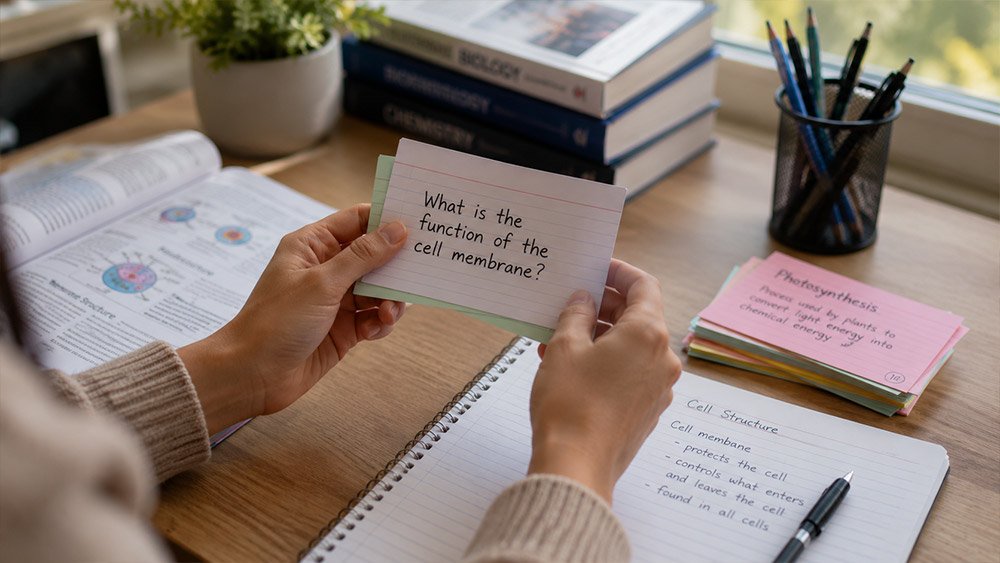
It feels backwards, but one of the strongest findings in learning science is this: trying to recall information — even when you get it wrong — builds stronger memory than reviewing it one more time.
The research: In a well-known 2008 study, Jeffrey Karpicke and Henry Roediger (published in the journal Science) found that students who tested themselves on material, without looking at their notes, retained significantly more a week later than students who spent the same amount of time simply rereading.
Why it works: The struggle of pulling information out of your memory — even unsuccessfully — strengthens the neural pathway to that information. Rereading doesn’t create that struggle, so it doesn’t build the same strength.
Easy ways to apply this: – Use flashcards instead of highlighted notes – Close your book and write down everything you remember about a topic – Attempt practice questions before checking the answers – Explain a concept out loud from memory, as if teaching someone else
Tip 2: Spread Your Study Sessions Out — Even If It Feels Inefficient
The research: A landmark 2006 analysis by Nicholas Cepeda and colleagues, reviewing decades of data, confirmed something researchers had suspected for over a century: studying the same material across several shorter sessions beats one long cramming session, even when total study time is identical.
This is called the spacing effect, or distributed practice.
Why it works: Each time you let some forgetting happen and then bring the information back to mind, your brain treats it as more important and stores it more durably. Cramming gets you through tomorrow’s quiz, but the memory fades within days. Spacing produces memories that last for months.
A simple way to apply this:
- Instead of one 5-hour session before an exam
- Try five 1-hour sessions across five days
- Revisit the same material each time, rather than moving on completely
Tip 3: Stop Trusting How “Familiar” Something Feels

This is the part of the research that explains why so many students feel blindsided by exam results despite “studying hard.”
The problem: Rereading and highlighting create a sense of familiarity with the material. The text starts to feel recognizable, and your brain mistakes that recognition for actual knowledge. Researchers call this an illusion of competence.
You recognize the sentence when you see it again — but that’s different from being able to produce the same information from memory, without the text in front of you. That’s exactly what an exam requires.
Why testing feels harder: Testing yourself exposes the gap between recognizing information and actually retrieving it. That discomfort is a sign the technique is working, not a sign you’re doing something wrong.
Key takeaway: Difficulty, in this specific context, is usually a good sign. High-value study techniques tend to feel harder precisely because they demand real mental effort — while low-value techniques like highlighting feel easy mainly because they require very little effort at all.
Quick Recap
- Test yourself instead of rereading — even before you feel ready
- Space out your study sessions instead of cramming
- Trust difficulty, not familiarity, as a sign of real learning
None of these three tips require new apps or expensive courses. They just require shifting time away from passive review and toward active, spaced-out retrieval — even though it will feel less comfortable at first.
Which of these three tips are you going to try in your next study session? Let us know in the comments, and follow us for more research-backed learning tips.