

Why Most People Never Actually Get Clear Skin
Walk down any skincare aisle and you’ll see dozens of products promising clear skin – yet so many people still struggle with breakouts despite trying product after product. The issue usually isn’t a lack of effort. It’s that most people are missing one or two foundational habits that dermatologists consider non-negotiable, while spending their energy on trendy extras that don’t move the needle nearly as much.
Here are five tips dermatologists actually rely on – not marketing claims, but genuine clinical recommendations.
Tip 1: Use Salicylic Acid – But Give It Time
Salicylic acid is considered a first-line, evidence-backed treatment for mild to moderate acne, and it’s available without a prescription.
How it works: It penetrates oily pores and dissolves the buildup that causes blackheads and whiteheads, while also reducing inflammation.
How to use it correctly:
- Start with a 0.5%–2% concentration, once daily
- Apply to clean, dry skin
- Give it 6–8 weeks before judging results – this is the timeline dermatologists typically recommend before expecting visible improvement
Common mistake: Expecting overnight results and switching products too soon. Skin cell turnover takes weeks, not days.
Tip 2: Never Skip Sunscreen – Especially While Treating Acne
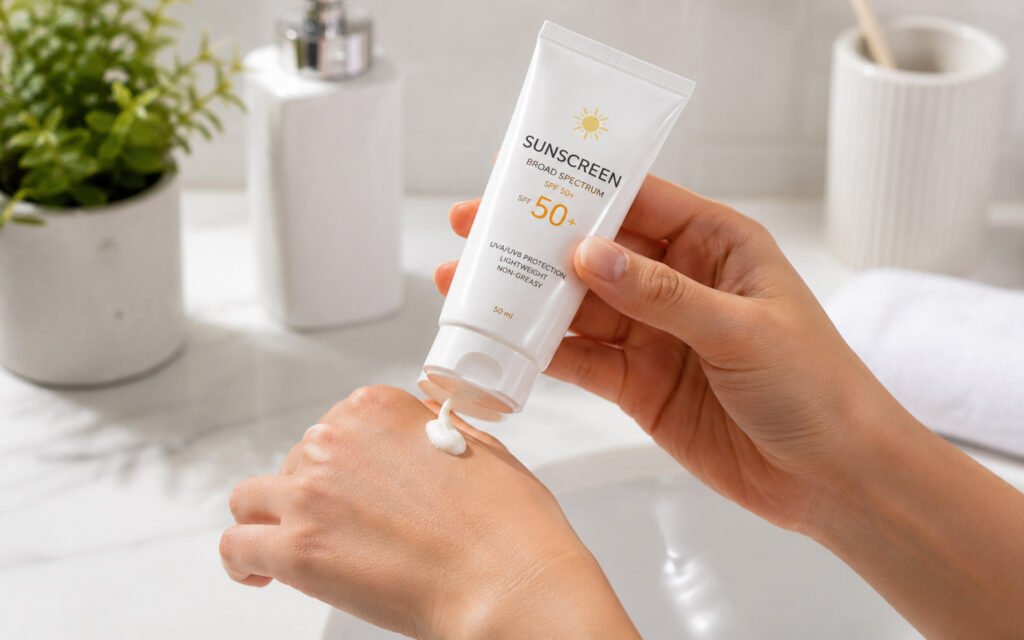
This is the tip most people underestimate. Acne treatments like salicylic acid and retinoids make skin more sensitive to the sun, and unprotected sun exposure can worsen the dark marks left behind after a pimple heals.
What to look for:
- Non-comedogenic (labeled specifically as “won’t clog pores”)
- Broad-spectrum protection, SPF 30 or higher
- Oil-free, gel-based formulas for acne-prone skin
Why this matters more than people think: Sun exposure doesn’t just risk long-term skin damage – it directly worsens post-acne dark spots, undoing progress from other treatments you’re using.
Tip 3: Stop Over-Washing and Over-Exfoliating
There’s a common instinct to wash acne-prone skin more aggressively, assuming oil and dirt are the main problem. Dermatologists consistently push back against this.
Why it backfires:
- Over-washing strips the skin’s natural barrier
- A damaged barrier often leads to more oil production, not less, as skin tries to compensate
- Harsh scrubs can create micro-tears that worsen inflammation and acne
What to do instead:
- Cleanse gently, twice a day maximum
- Use a non-comedogenic cleanser without harsh beads or scrubbing particles
- Follow up with a lightweight, oil-free moisturizer – skipping moisturizer is a common mistake that often makes acne-prone skin produce even more oil
Tip 4: Choose Non-Comedogenic Products for Everything
This single label – “non-comedogenic” – matters more than most people realize, and it applies beyond just moisturizer.
Where it matters most:
- Cleansers
- Moisturizers
- Sunscreen
- Makeup and foundation
Products that aren’t labeled this way may contain heavier oils or emollients that sit on the skin and clog pores, quietly undoing the benefits of an otherwise good routine.
Tip 5: Be Patient With Retinoids – They Work, But Slowly
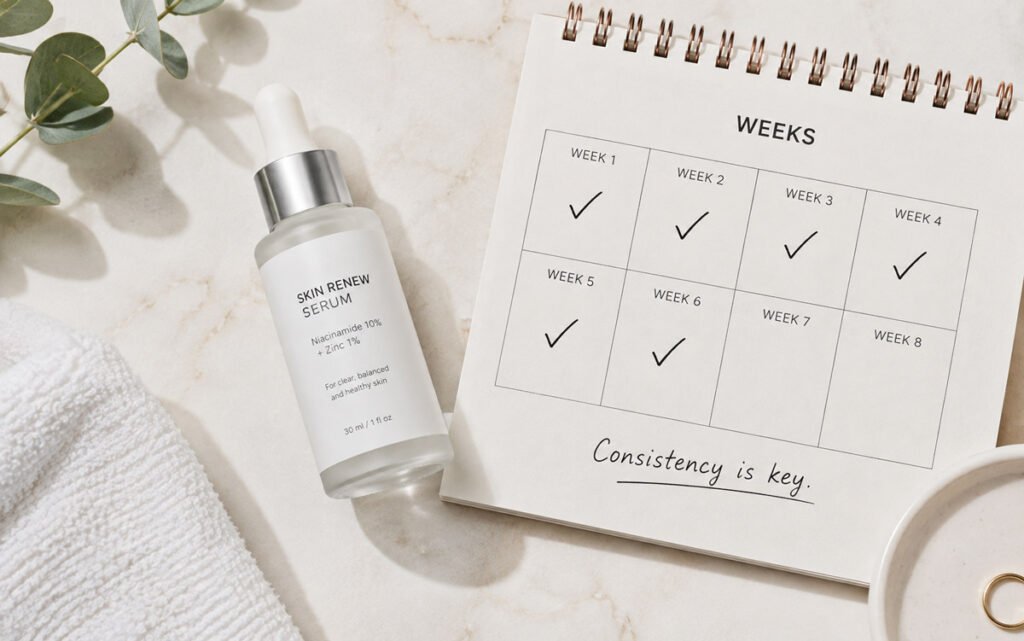
Topical retinoids are considered one of the most effective treatments for acne and are recognized by major health bodies as a cornerstone acne treatment, working by increasing skin cell turnover and keeping pores clear.
What to expect:
- Often causes some dryness or mild peeling in the first few weeks
- Best applied at night, since it increases sun sensitivity
- Visible improvement typically takes 8–12 weeks of consistent use
Why so many people quit too early: The initial “purging” phase, where skin can temporarily look worse before improving, discourages people from sticking with it — even though this phase is a normal, expected part of how retinoids work.
Frequently Asked Questions
How long does it really take to see clear skin results?
Most dermatologist-recommended treatments – salicylic acid, retinoids, consistent sunscreen use – take 6 to 12 weeks of consistent use before real improvement becomes visible. Skin cell turnover simply doesn’t happen faster than that, regardless of the product.
Is it bad to use multiple acne products at once?
Layering too many active ingredients at once is one of the most common causes of irritation, especially when combining strong actives like retinoids and salicylic acid without guidance. Dermatologists generally recommend a simpler routine over a complicated one.
Does diet actually affect acne?
While skincare products address the surface, some research suggests high-sugar and high-dairy diets may worsen acne in certain people, though this varies significantly from person to person and isn’t a replacement for a proper skincare routine.
When should I see a dermatologist instead of treating it myself?
If you notice painful cystic acne, scarring, or no improvement after 8–12 weeks of a consistent routine, that’s generally the point where dermatologists recommend moving to prescription-strength treatment rather than continuing with over-the-counter products alone.
Quick Recap
- Use salicylic acid consistently, and give it 6–8 weeks
- Never skip sunscreen, especially while treating acne
- Stop over-washing and over-exfoliating
- Choose non-comedogenic products across your entire routine
- Be patient with retinoids – results take 8–12 weeks
Clear skin rarely comes from a single product – it comes from consistently following the basics dermatologists have relied on for years, even when progress feels slow. Give one or two of these tips a real trial over the next two months, and track your skin’s progress with photos rather than judging it day to day.
Which of these five tips are you already doing, and which one will you add to your routine? Let us know in the comments, and follow us for more dermatologist-backed skincare tips!