

Your Kitchen Has More Hair Science Than You’d Expect
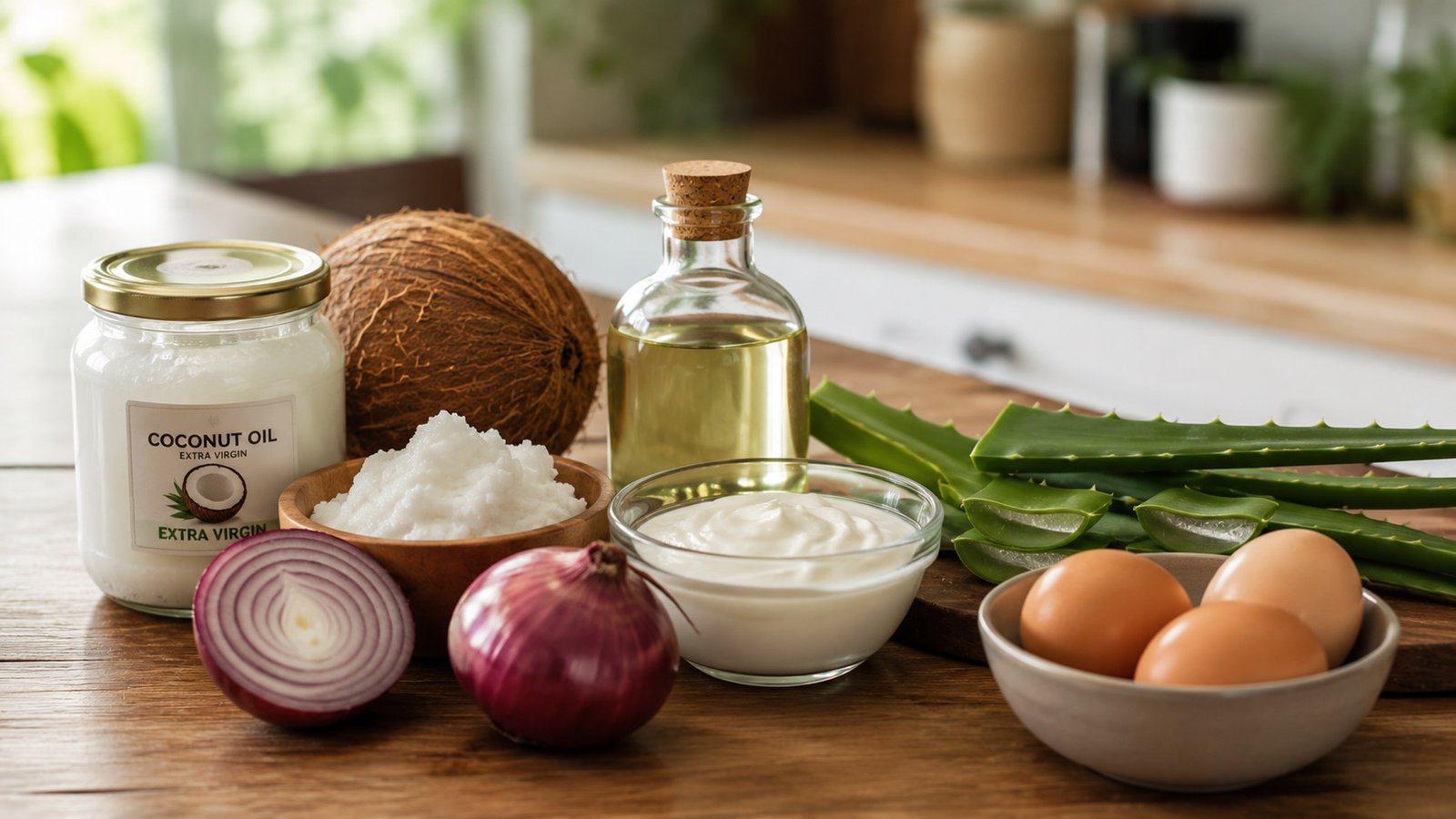
Search “DIY hair remedies” and you’ll find endless lists claiming miraculous regrowth from things sitting in your fridge. Most of these claims are exaggerated — but a genuine handful of kitchen ingredients do have real research behind them, even if that research comes with more nuance than viral posts suggest. Here are seven that are actually worth trying, along with what the evidence really says.
1. Onion Juice — For Alopecia Areata, Not General Hair Fall
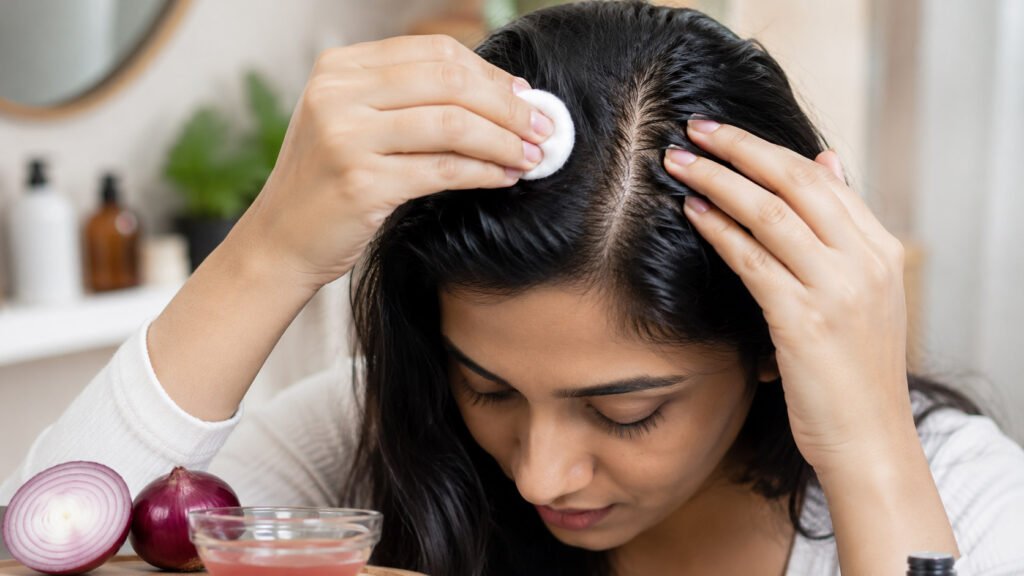
This is probably the most-searched natural hair remedy — and also the most misunderstood.
What the research shows: A 2002 study by Sharquie and Al-Obaidi, published in the Journal of Dermatology, tested crude onion juice on people with alopecia areata (an autoimmune condition causing patchy hair loss). About 87% of participants who applied onion juice daily for two weeks saw some regrowth after six weeks, compared to just 13% using tap water.
The important caveat: This evidence applies specifically to alopecia areata — not general thinning, pattern baldness, or postpartum shedding. Dermatologists are clear that onion juice hasn’t been shown to help those other, more common causes of hair fall.
How to use it:
- Blend one onion, strain the juice
- Apply directly to the scalp, leave for 20–30 minutes
- Rinse thoroughly with a mild shampoo (the smell fades with rinsing)
- Always patch test first — it can irritate sensitive scalps
2. Coconut Oil — For Protection, Not Growth
Coconut oil is probably the most universally recommended hair oil — but it’s important to understand exactly what it does and doesn’t do.
What the research shows: Studies confirm coconut oil’s small molecular structure lets it penetrate the hair shaft, reducing protein loss and breakage. A 2022 systematic review in the Journal of Cosmetic Science examining coconut, castor, and argan oils found solid evidence for coconut oil improving hair strength and treating brittleness — but limited evidence that it actually increases hair growth.
What this means practically: Use coconut oil to prevent breakage and keep hair looking healthy, not as a growth treatment. If your goal is hair growth specifically, this isn’t the ingredient to rely on.
How to use it: Warm slightly, massage into scalp and lengths, leave for at least an hour (or overnight), then shampoo out thoroughly.
3. Curd (Yogurt) — For Scalp Health and Shine
Curd has been used in Indian households for hair care for generations, and its benefits do have a reasonable scientific basis.
Why it works:
- Contains lactic acid, a gentle exfoliant that helps clear dead skin and product buildup from the scalp
- Rich in probiotics that may support a healthier scalp microbiome
- Provides light protein and moisture that can improve shine and softness
How to use it: Apply plain, unsweetened curd directly to the scalp and hair, leave for 20 minutes, and rinse with a mild shampoo. Once a week is usually enough.
4. Aloe Vera — For Scalp Irritation and Buildup
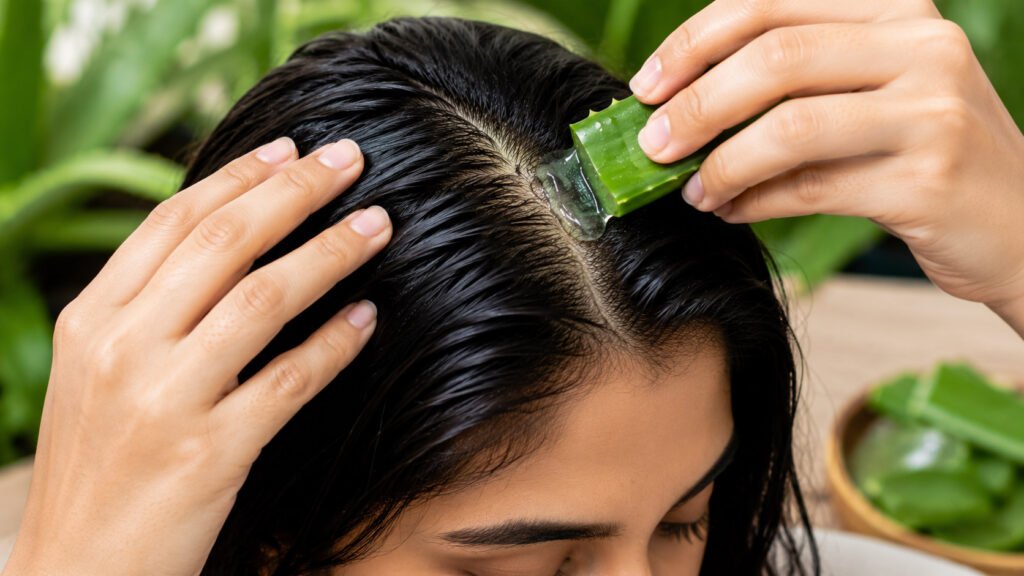
Aloe vera is one of the more consistently recommended natural ingredients across dermatology sources, largely because of its anti-inflammatory properties.
Why it works:
- Soothes an irritated, flaky, or itchy scalp
- Has mild antimicrobial properties that can help with dandruff-related discomfort
- Lightweight enough not to weigh hair down, unlike heavier oils
How to use it: Apply fresh aloe vera gel directly to the scalp, leave for 30 minutes, then rinse. It layers well underneath oil treatments too.
5. Egg Masks — For Temporary Strength and Shine
Eggs are protein-rich, and hair itself is made largely of a protein called keratin — which is the logical basis for this remedy.
Why it works: The protein in eggs can temporarily coat and strengthen the hair shaft, improving shine and reducing the appearance of split ends. This effect is temporary rather than a permanent structural change, since hair is not living tissue that absorbs and retains treatments the way skin does.
How to use it: Whisk one or two eggs, apply to damp hair, leave for 20 minutes, then rinse with cool water (hot water can cook the egg into your hair, which is exactly as unpleasant as it sounds).
6. Fenugreek Seeds (Methi) — For Scalp Nourishment
A traditional Ayurvedic remedy that’s gained renewed interest for its nutrient profile.
Why it works: Fenugreek seeds are rich in protein and nicotinic acid, both linked to hair health, along with mucilage that provides a soothing, conditioning effect on the scalp when soaked and blended into a paste.
How to use it: Soak a tablespoon of seeds overnight, blend into a paste in the morning, apply to the scalp for 30–40 minutes, then rinse.
7. Rosemary and Castor Oil — For Circulation, With Modest Evidence
These two are often mentioned together because they’re both believed to work through improved scalp circulation, though the strength of evidence differs.
What the research shows: Rosemary oil has some clinical support — a well-cited trial found it performed comparably to minoxidil (a proven medical treatment) for hair thickness over six months, though the study was small. Castor oil’s evidence is weaker; while its ricinoleic acid content is thought to support circulation, most experts describe its role as more supportive than transformative.
How to use them: Mix a few drops of rosemary essential oil into a carrier oil like coconut or castor oil, massage into the scalp for a few minutes to boost blood flow, and leave for at least 30 minutes before washing out.
When Kitchen Remedies Aren’t Enough
Dermatologists consistently emphasize one point across all this research: natural remedies can support scalp health and hair quality, but they are not a substitute for medical evaluation if you’re experiencing significant hair loss. Sudden shedding, bald patches, or thinning that doesn’t improve after several weeks of consistent home care are signals worth discussing with a dermatologist, since underlying causes like thyroid issues, iron deficiency, PCOS, or hormonal changes need targeted treatment that kitchen ingredients simply can’t address.
Quick Recap
| Ingredient | Best For | Evidence Level |
| Onion Juice | Alopecia areata specifically | Clinical study support |
| Coconut Oil | Breakage prevention, shine | Strong for protection |
| Curd | Scalp exfoliation, shine | Reasonable, traditional |
| Aloe Vera | Irritation, dandruff comfort | Well-supported |
| Egg Mask | Temporary strength, shine | Logical, short-term |
| Fenugreek | Scalp nourishment | Traditional, modest |
| Rosemary Oil | Circulation, thickness | Small clinical trial |
None of these seven remedies will replace a proper hair care routine or medical treatment where needed — but used consistently and with realistic expectations, they can genuinely support healthier-looking hair over time.
Which of these kitchen remedies are you going to try first? Tell us in the comments below, and follow us for more natural, research-backed beauty tips!