

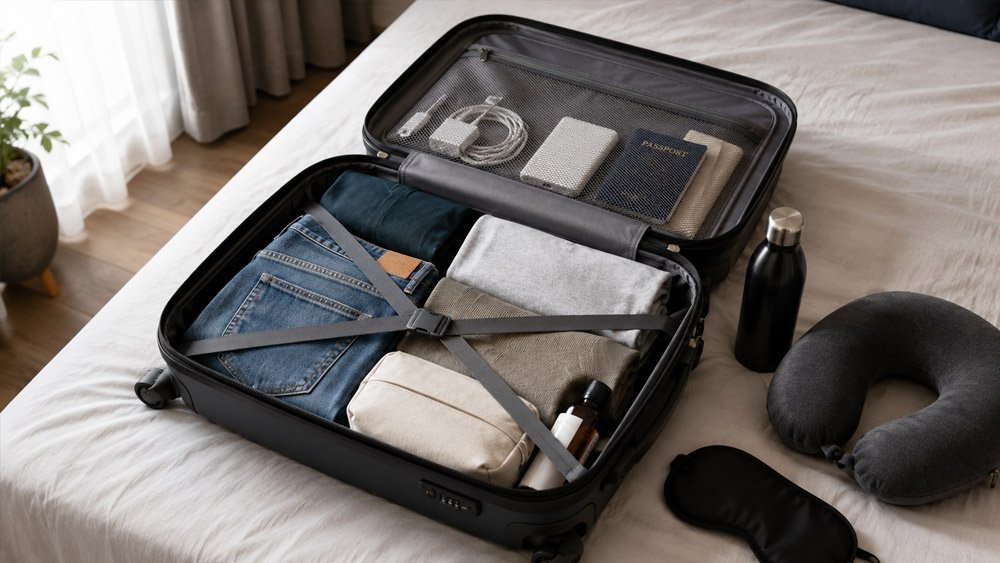
Most people don’t overpack because they genuinely need everything they bring — they overpack because packing light feels risky, and the anxiety of possibly forgetting something important quietly wins out over the annoyance of hauling extra weight. The fix isn’t willpower — it’s a system that removes the guessing entirely.
The Category Method, Not the Memory Method
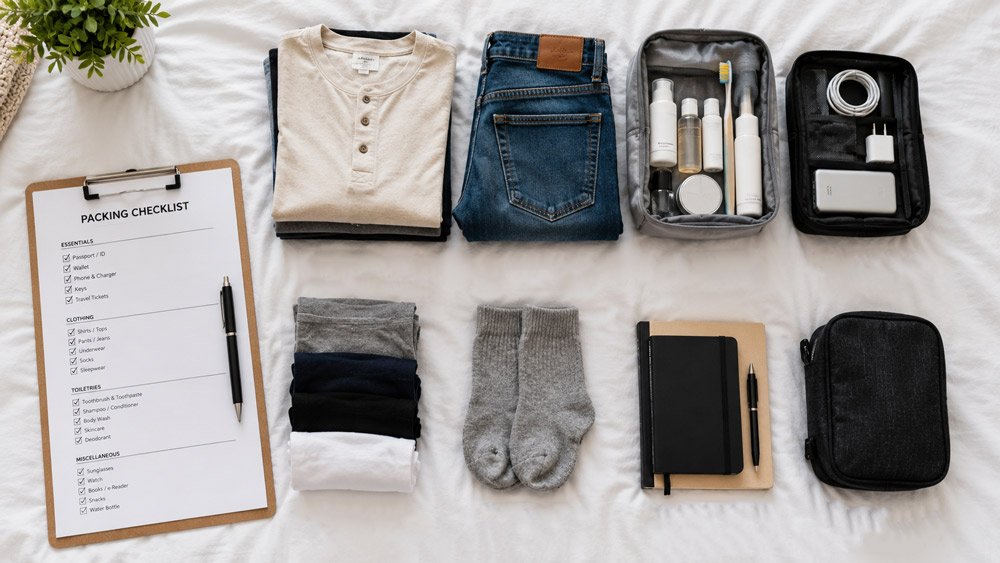
Trying to pack by simply picturing your trip and mentally listing what you’ll need is exactly how essentials get missed — memory is unreliable under the mild stress of pre-trip planning. A category-based checklist works far better: documents, toiletries, clothing, electronics, medications, “trip-specific” items. Going through each category deliberately, rather than relying on a mental walkthrough, catches things a memory-based approach reliably misses.
Pick a Colour Scheme, Not Just Outfits
Choosing two or three coordinating colours and building your wardrobe within them means almost everything can mix and match with everything else — which quietly cuts the number of items needed by nearly half, without cutting the number of outfit combinations available.
The “Would I Buy This Again” Test for Toiletries
Full-size bottles are one of the biggest unnecessary weight contributors in most suitcases. Decanting into small travel bottles, or simply buying minis specifically for the trip, removes a surprising amount of bulk — and for most trips, anything genuinely forgotten can be bought at the destination anyway.
Roll, Don’t Fold, for Everyday Clothing
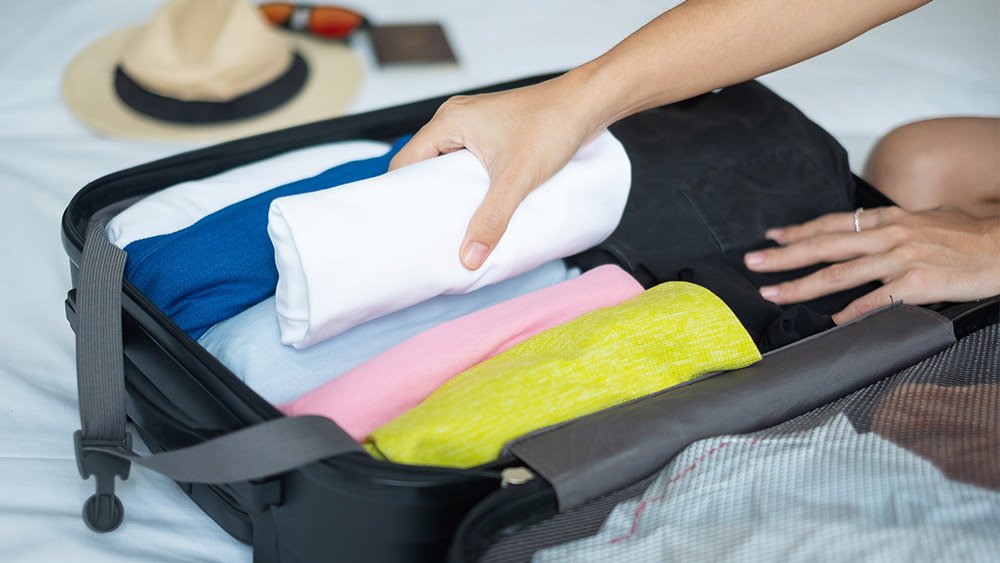
Rolling clothing instead of folding it saves meaningful space in a bag and tends to reduce deep creasing, especially for casual fabrics. Folding still makes sense for structured items like blazers, but for the bulk of a wardrobe, rolling is simply more space-efficient.
Build In a “Definitely Forgettable” Checklist
A handful of items get forgotten disproportionately often, precisely because they’re not part of a normal daily routine — chargers, adapters, a spare contact lens case, prescription medication, the actual physical copy of a booking confirmation. Keeping a standing list specifically for these easy-to-forget items, reused for every trip, closes the exact gap that causes most “oh no, I forgot…” moments.
Do a Final “Empty Bag” Walkthrough
Before zipping the bag closed, do one final pass imagining the actual sequence of your trip — leaving home, the airport, arrival, the first morning — and mentally check whether you have what each stage requires. This catches genuinely trip-specific gaps that a generic checklist can’t anticipate.
Quick Answers
How do I know if I’m packing too little rather than too light?
If your list covers every category (documents, health, clothing, electronics, trip-specific needs) and you’re still cutting from there, you’re packing light responsibly, not recklessly. Cutting corners on medication, documents, or your destination’s climate needs is a different problem than simply packing efficiently.
Is it worth buying specific packing organizers or cubes?
They’re not essential, but they do make the category-based approach easier to maintain, especially for longer trips, by keeping each category physically separated inside the bag.
Packing light isn’t about bringing less thoughtfully — it’s about bringing exactly what’s needed, sorted through a system reliable enough that you’re not relying on memory alone at 11pm the night before a flight.