


A career “matching your skills and personality” is a genuinely useful goal, but it’s rarely something a single quiz or assessment can determine — the outcome that actually matters, and the thing a manager, recruiter, or client evaluates, is whether someone performs consistently well and seems genuinely engaged in the work, not just whether a personality test produced a matching label.
What’s Actually Being Evaluated
A hiring manager isn’t evaluating whether your personality type matches a job description — they’re evaluating whether you demonstrate the specific behaviours the role requires, and whether your track record suggests genuine sustained interest rather than a temporary or convenient choice. Genuine fit tends to show up as consistency: steady performance without requiring unusual effort to sustain, and a demonstrated pattern of choosing similar types of work repeatedly, even across different employers or projects.
Turning This Into an Action Sequence
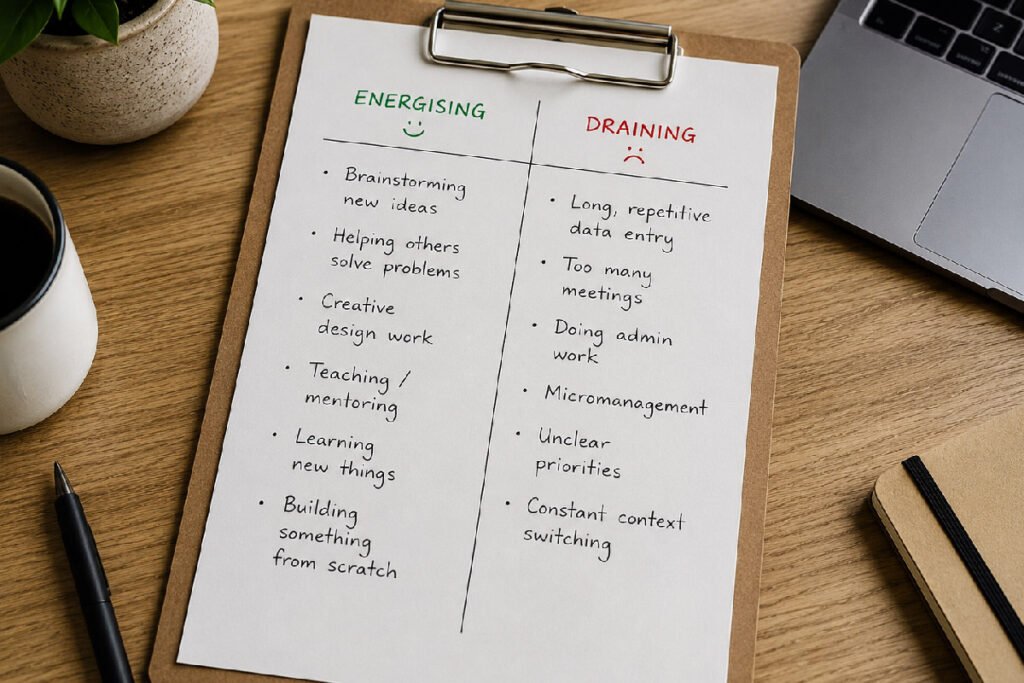
Audit your energy, not just your competence. List recent tasks or projects, then separately note which ones left you energised afterward versus which ones you completed competently but found draining. Competence without energy is a common trap — being good at something doesn’t necessarily mean it’s a good long-term fit.
Identify the transferable skills underneath your current role, separate from the specific job title. A skill like “translating complex information for a non-expert audience” might currently sit inside a technical writing role but transfers directly to teaching, product management, or client-facing consulting — the skill matters more than the label it currently wears.
Test potential directions through small, low-risk trials before committing fully. A side project, a volunteer role, a short freelance gig, or even shadowing someone in a target field for a day provides real evidence about fit that a personality assessment alone cannot — direct exposure consistently reveals more than self-reported preference.
Use a values checklist alongside a skills checklist. Skills determine what you’re capable of; values (autonomy, structure, collaboration, individual recognition, mission-driven work) determine what you’ll actually sustain enthusiasm for over years, not just months. A role can be a skills match and a values mismatch simultaneously, which is a common, under-discussed source of eventual burnout.
Talk to people already doing the work, not just people who chose the field. A 20-30 minute informational conversation about the actual day-to-day reality of a role — not the idealised version — surfaces mismatches early, before a full career transition has been made based on an incomplete picture.

Measuring the Result
A genuine fit shows up as sustained energy and consistent performance over a meaningful stretch of time — generally several months at minimum — rather than initial excitement that fades once the novelty wears off. Tracking whether energy levels and performance both remain steady past the first few months is a far more reliable fit signal than how promising the role sounded at the outset.
What to Change If the First Attempt Doesn’t Work
If a chosen direction turns out to be a skills match but an energy or values mismatch, the adjustment isn’t necessarily abandoning the field entirely — it’s identifying specifically which element was misaligned (the actual tasks, the work environment, the values fit) and searching for a variation within the same skill set that addresses that specific gap, using the trial-based approach above before committing to a larger transition again.
Found this useful? Share your thoughts in the comments and follow our WhatsApp channel for more research-backed guides like this.