

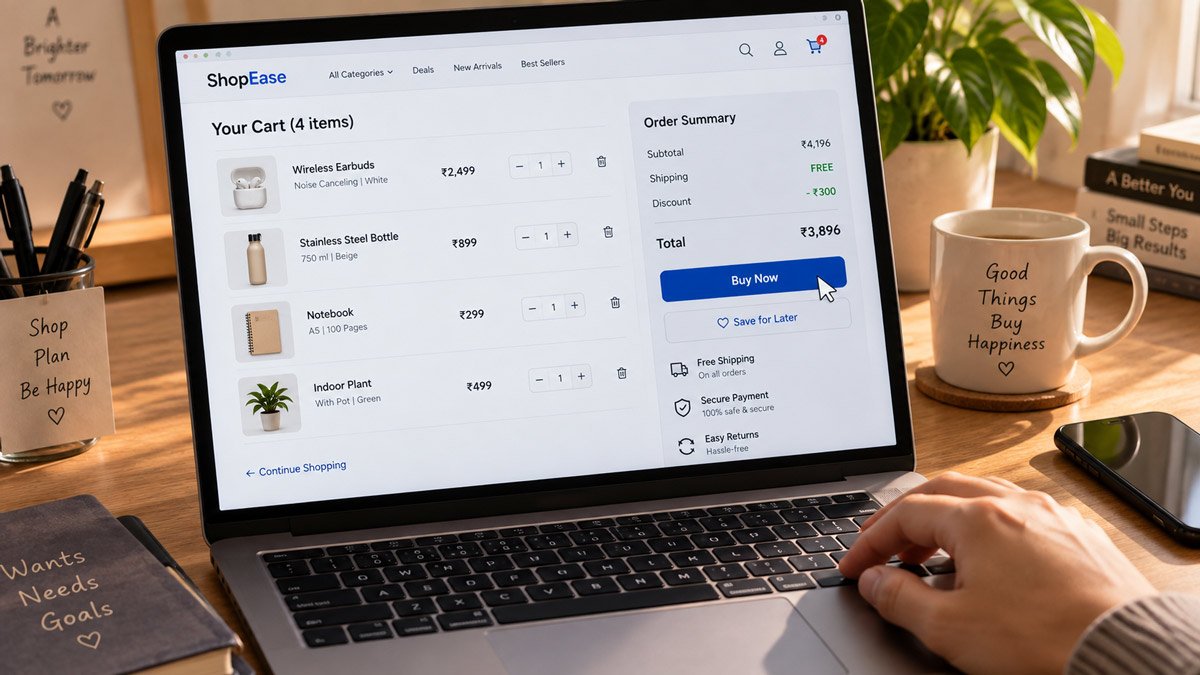
You went in for one thing. Toothpaste, maybe, or a birthday gift for someone else. You walked out — or closed the checkout tab — with four other items you hadn’t thought about ten minutes earlier. It wasn’t a big purchase. It rarely is. But it happened again, and it’s starting to feel less like a one-off and more like a pattern you can’t quite locate the start of.
This isn’t a discipline problem, and estimates suggest it’s genuinely common — some research puts impulse spending at 40 to 80% of all purchases across various studies, and roughly three in four Americans engage in emotional spending at some point. If it’s happening to you, it’s happening to nearly everyone around you too.
The Purchase Was Rarely About the Product
Here’s the part that reframes almost everything: impulse purchases are rarely triggered by genuine need. They’re triggered by a feeling state — stress, boredom, sadness, loneliness, or even excitement — and the product itself is almost incidental to what’s actually happening.
Research on financial behavior consistently identifies the same handful of emotional states behind unplanned spending. Each one drives the impulse through a slightly different mechanism, but all of them lead to the same place: a purchase that had little to do with rational evaluation of need or value.
Stress Makes the Brain Bad at Delaying Reward
When cortisol rises under stress, the brain’s decision-making genuinely shifts — it starts favoring fast, immediate reward and discounting future consequences. This isn’t a metaphor for feeling impulsive. It’s a documented cognitive profile, and it’s exactly the state that produces impulse buys.
This matters because it explains why willpower alone often doesn’t hold up under stress. The brain in that state isn’t weighing “do I need this” against “can I afford this” with its usual clarity — it’s already leaning toward whatever offers quick relief, and a purchase is one of the fastest, most available options.
The Anticipation Is the Actual Reward
One detail from the neuroscience here is worth sitting with: the dopamine spike from shopping peaks during anticipation — the browsing, the imagining, the moment right before checkout — not after the item arrives. This is why the act of shopping often feels better than actually owning the thing, and why satisfaction from a purchase tends to fade fast once it’s delivered.
This also explains a familiar pattern: the urge to keep browsing even after adding something to the cart. The brain isn’t chasing the object. It’s chasing the anticipation, and anticipation resets the moment a new item catches attention.
Loneliness Has a Specific, Documented Pull Toward Spending
Among the emotional drivers, loneliness stands out for a particular reason: research by consumer psychologist Rik Pieters found it specifically predicts increased materialism and shopping as a compensatory strategy. People experiencing disconnection tend to purchase items tied to social identity or status — things that carry an implicit promise of belonging, even temporarily.
This isn’t unique to loneliness — boredom works similarly, offering the “illusion of purpose” through the small project of finding the right item. But loneliness’s link to spending is one of the more specifically studied connections in this research, which is worth knowing if unplanned purchases tend to cluster around isolated stretches of time.
Common Assumption vs. What’s Actually Known
Commonly assumed: impulse buying means someone lacks financial discipline or self-control.
What’s actually known: it’s better understood as the predictable output of a brain responding to environments — retail and digital — specifically engineered to trigger purchasing, combined with genuine emotional states seeking regulation. Framing it as a moral failure tends to backfire.
Commonly assumed: feeling shame after an impulse purchase will motivate better choices next time.
What’s actually known: shame-based self-criticism after spending typically worsens the pattern rather than improving it — shame increases distress, and distress is itself a trigger for the same behavior, creating a loop rather than a correction.
Commonly assumed: the fix is simply trying harder to resist the urge in the moment.
What’s actually known: research on financial behavior change suggests connecting spending decisions to personal values — “I prioritize financial security for my family” — produces more durable change than willpower-based restriction rules like “I shouldn’t spend money.”
The Practical Interpretation
Put together, this points toward a specific and useful habit: before evaluating whether a purchase is impulsive or reasonable, ask what you were actually feeling right before the urge showed up. Stress before a browsing session, loneliness after a quiet evening, boredom during a slow afternoon — these are identifiable, and once identified, they’re addressable directly, rather than being fought indirectly through willpower against the purchase itself.
This reframing also removes some of the guilt that tends to compound the problem. The impulse isn’t random or careless — it’s information about an emotional state that was looking for regulation, and shopping happened to be an available, fast option.
What to Do First
For one week, before any non-essential purchase, pause and name the feeling present in that moment — even a single word is enough. This alone tends to create a small but real gap between the impulse and the action, which is often where a more intentional choice becomes possible.
For anything beyond a small, low-stakes purchase, apply a genuine 24-hour rule — not as a punishment, but as a window that lets the emotional intensity driving the urge settle before a decision gets made.
The Question Worth Exploring Next
Once the emotional pattern behind a purchase is visible, the more useful next question isn’t “how do I stop spending” — it’s “what else could actually address this feeling, if not a purchase.” Exercise, a conversation, a short walk, or simply sitting with boredom without needing to resolve it can serve the same regulatory function a purchase was substituting for. That’s a distinct skill worth building once the pattern itself is easier to see.
What have you noticed triggers your own unplanned purchases? Tell us in the comments — and follow Oasis Orbit’s WhatsApp channel for our next finance deep-dive.