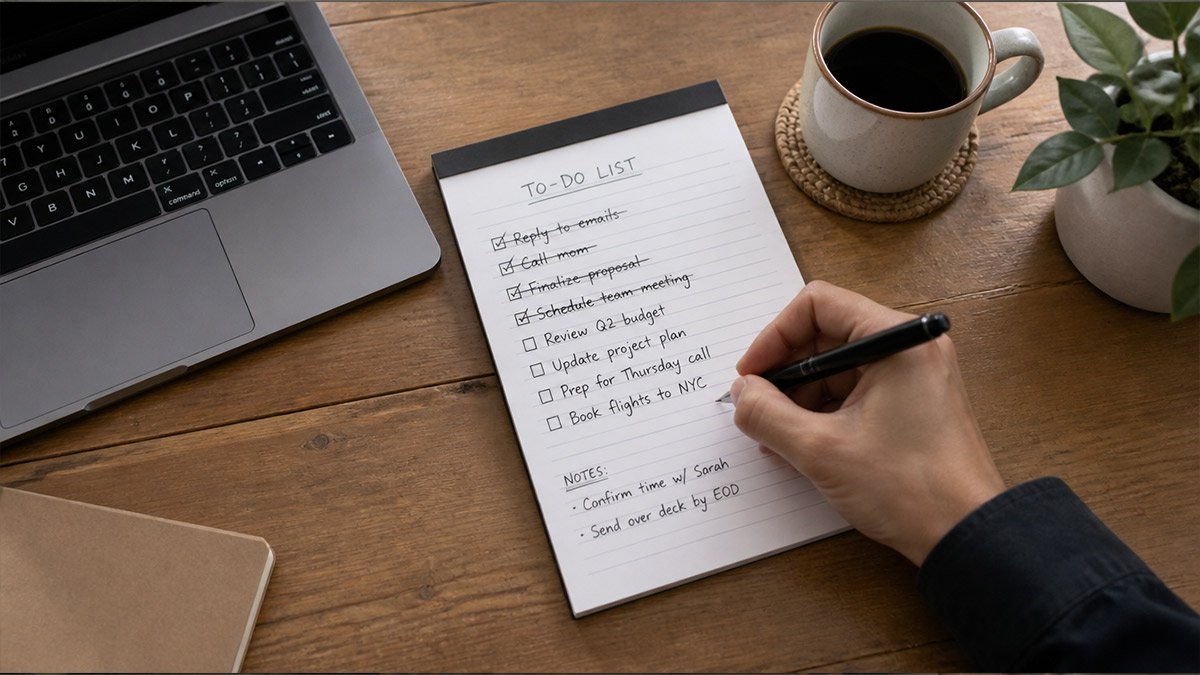

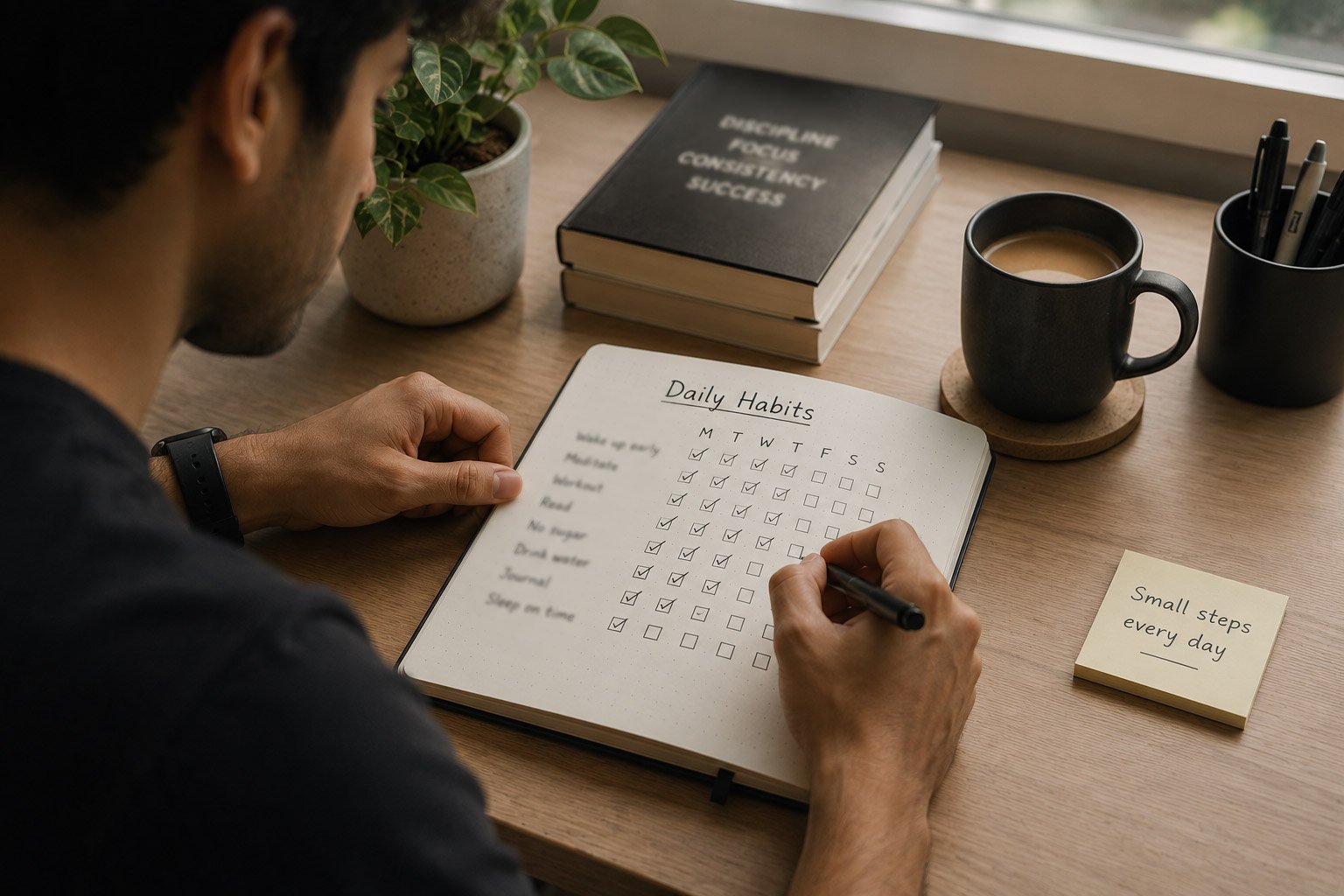
The Problem: Why New Habits Almost Always Fail
You’ve probably tried this before — you get excited, start a new habit (waking up early, exercising, reading more), and for the first few days it feels amazing. Then, somewhere between day 4 and day 10, life gets busy, motivation fades, and the habit quietly disappears. If this cycle sounds painfully familiar, the problem isn’t your willpower — it’s your approach. Most people try to build habits using motivation alone, which is unreliable by nature. What actually works is building systems around three specific habits that make good habits automatic, not effortful.
Habit 1: Start Ridiculously Small

The Problem It Solves: Most people fail at new habits because they start too big, too fast. Deciding to “exercise for an hour every day” or “read a book a week” sounds motivating on day one, but it quickly becomes overwhelming, and overwhelm is the number one reason habits get abandoned.
The Fix: Shrink the habit down to something almost impossible to skip. Instead of “exercise for an hour,” commit to “put on your shoes and walk for 2 minutes.” Instead of “read a book a week,” commit to “read one page a night.”
This works because the goal isn’t the two minutes itself — it’s making the habit so easy that your brain never has a reason to resist starting. Once you start, you’ll often naturally continue longer. But even on your worst days, the tiny version still gets done, and consistency — not intensity — is what actually builds a habit long-term.
How to apply this today: Pick one habit you’ve been struggling with and shrink it down by 80%. If your goal was “meditate for 20 minutes,” start with “sit quietly for 1 minute.”
Habit 2: Attach the New Habit to an Existing One
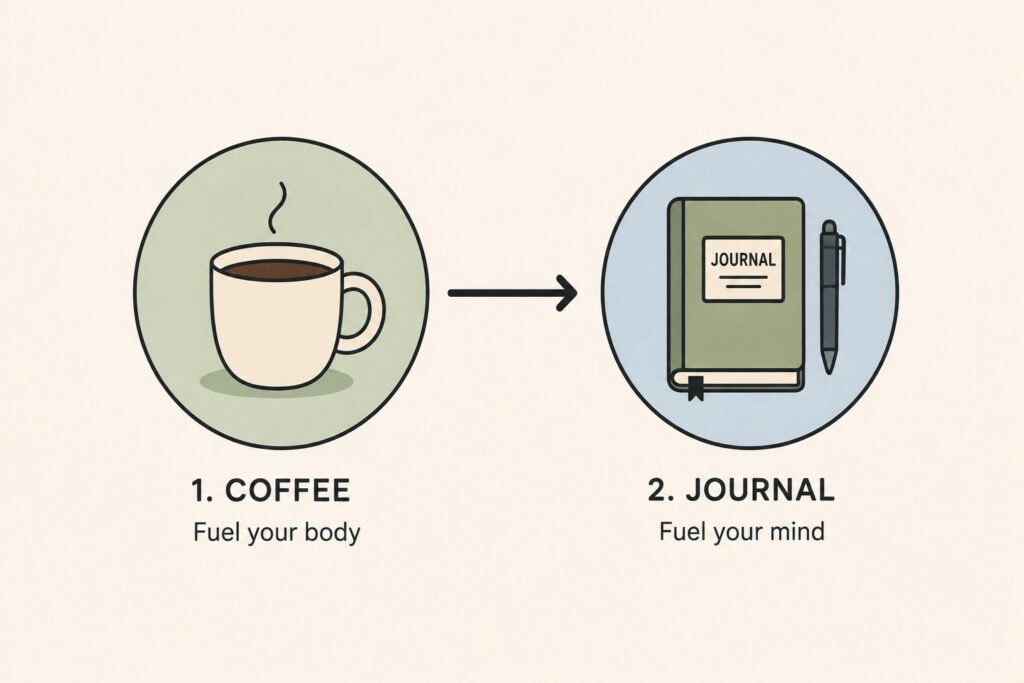
The Problem It Solves: Many people try to build a new habit in isolation, hoping willpower alone will remind them to do it. But without a clear trigger, it’s easy to simply forget — not because you don’t care, but because your day is already packed with existing routines that don’t include this new behavior.
The Fix: Use “habit stacking” — attach your new habit directly after an existing, automatic one. The formula is simple: “After I [current habit], I will [new habit].”
For example: – “After I pour my morning coffee, I will write down 3 things I’m grateful for.” – “After I brush my teeth at night, I will lay out my workout clothes for tomorrow.”
Your existing habits already have strong neural pathways in your brain — you do them without thinking. By attaching a new habit to that existing trigger, you borrow its automaticity, making the new habit far easier to remember and repeat.
How to apply this today: Identify one habit you already do every single day without fail, and stack your new habit right after it.
Habit 3: Track It Visually — Don’t Break the Chain
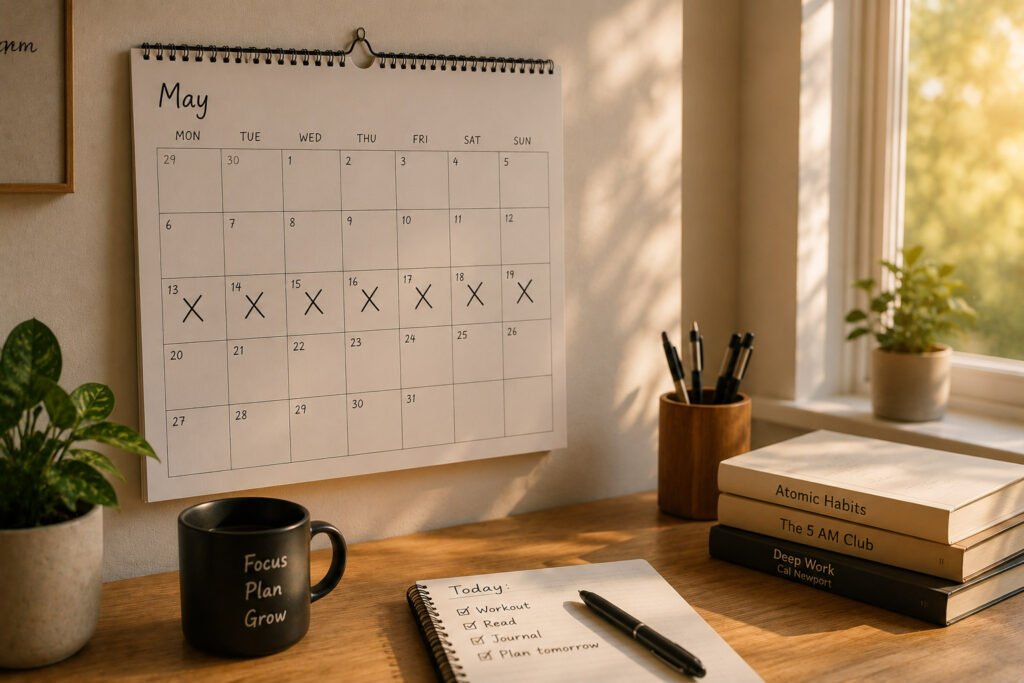
The Problem It Solves: Without a visible way to see your progress, it’s easy to lose motivation, especially in the first few weeks when results aren’t visible yet. Many people quit not because the habit isn’t working, but because they can’t “see” their consistency.
The Fix: Use a simple visual tracker — a calendar, a habit-tracking app, or even a notebook where you mark an X for every day you complete the habit. Once you build a streak, your brain naturally wants to protect it, making you far less likely to skip a day.
This technique, sometimes called “don’t break the chain,” turns habit-building into a visual game. Seeing 7, 14, or 30 consecutive marks becomes its own source of motivation — often more powerful than the original reason you started.
How to apply this today: Get a simple calendar or open a notes app right now, and mark today as Day 1 for the habit you’re building.
Putting It All Together
Building good habits isn’t about having more willpower than everyone else — it’s about designing your environment and routine so the right behavior becomes the easy, automatic choice. Start ridiculously small, attach your new habit to something you already do, and track your progress visually. Apply just these three habits, and you’ll find that the habits you’ve struggled with for years suddenly start to stick.
Which of these three habits are you going to try first? Tell us in the comments below, and follow us for more life-changing tips every week!