
Somewhere between skincare influencers and shelves stacked with serums promising different things, skincare has quietly turned into one of the more overwhelming parts of a daily routine. The genuinely reassuring part is that dermatologists have been pushing back on this complexity for a while now, and the actual evidence supports fewer products, not more.
The Problem With Complicated Routines
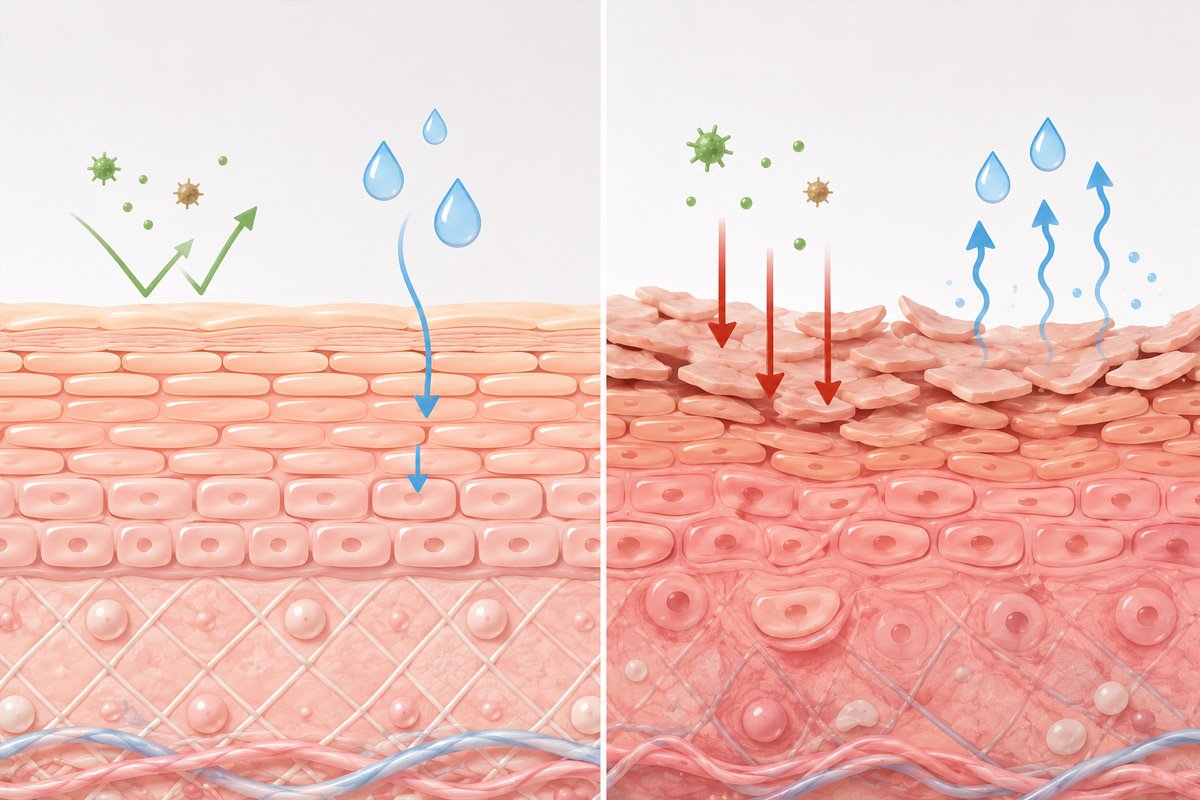
Dermatologists have started using a specific term for what they’re increasingly seeing in clinic: cosmetic intolerance syndrome, a pattern where skin becomes chronically reactive and irritated, not from any single bad product, but from the sheer accumulation of too many active ingredients layered on top of each other. The skin barrier — the outer layer that keeps moisture in and irritants out — simply wasn’t built to process ten different formulas a day, and when it’s overwhelmed, it responds with dryness, redness, breakouts, or unpredictable sensitivity that often gets misdiagnosed as needing more products to fix, compounding the original problem.
What the Research Actually Supports
A large 2025 consensus study brought together 80 dermatologists across more than 40 institutions to rate skincare ingredients by the strength of evidence behind them. Only a small handful of ingredients consistently earned strong, broad support: sunscreen filters, retinoids, and vitamin C in its pure, stable form. Everything else — while some ingredients genuinely help — has considerably more mixed or preliminary evidence, despite how confidently they’re often marketed.
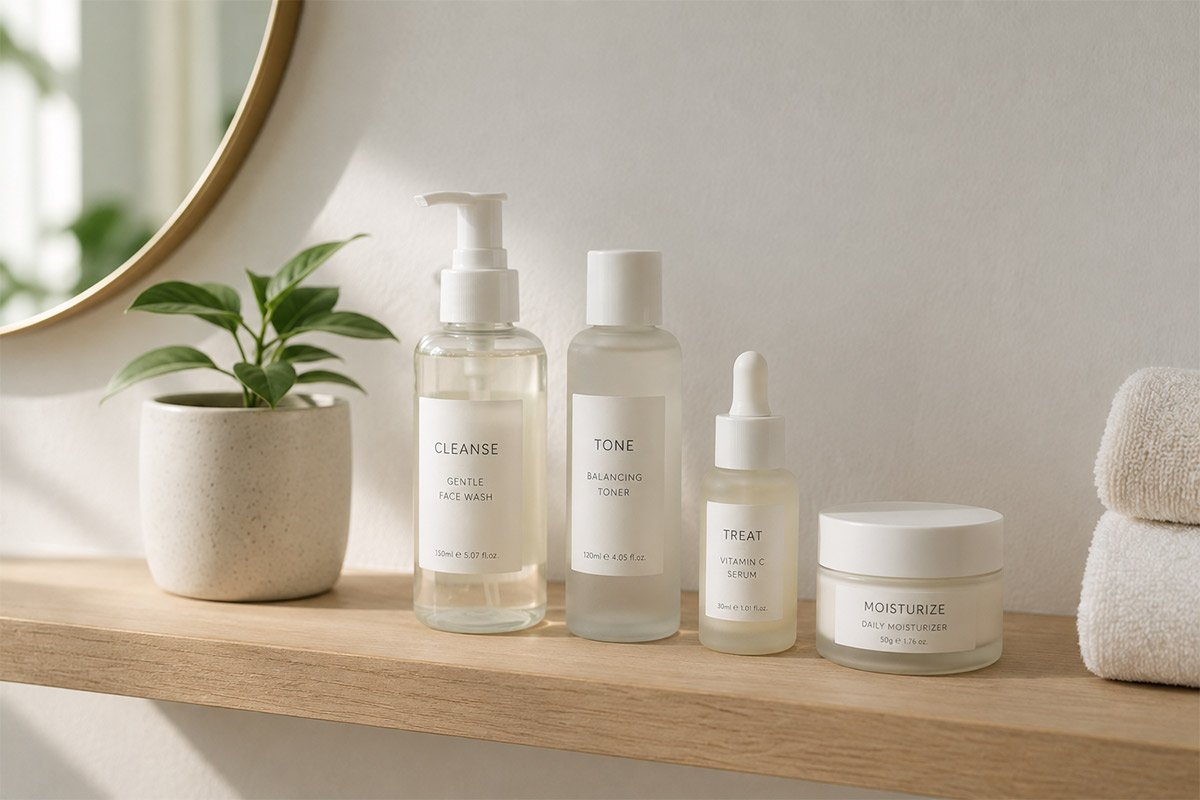
This lines up with a broader shift dermatologists are calling “skinimalism”: not a bare-bones, do-nothing approach, but a deliberate move toward fewer, well-chosen products that cover a routine’s actual essential functions, rather than a product for every conceivable concern.
The Three (Sometimes Four) Things Skin Actually Needs
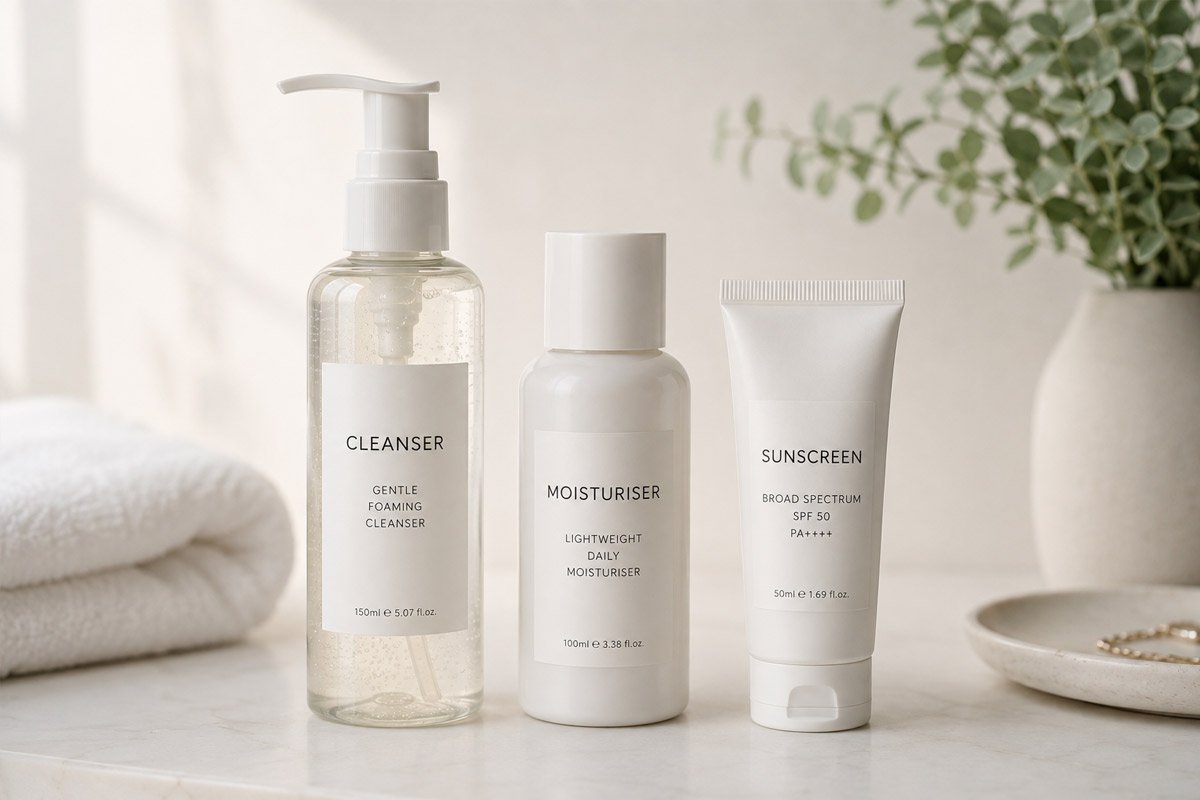
Cleanse. A gentle, non-stripping cleanser that removes dirt, oil, and sunscreen without leaving skin feeling tight afterward. Tightness after cleansing is generally a sign the product is too harsh for your skin, not a sign it’s “working.”
Moisturise. Every skin type benefits from a moisturiser, including oily and acne-prone skin — skipping it often backfires by triggering more oil production as skin tries to compensate for lost hydration.
Protect. Daily sunscreen, genuinely non-negotiable. It’s the single most evidence-backed anti-aging and skin-health product that exists, and its benefits compound daily over years.
Treat (optional, added later). Once the first three are a stable daily habit, a single targeted active — retinol for aging or texture, salicylic acid for acne, vitamin C for pigmentation and brightness — can be added, one at a time, based on an actual concern rather than a trending ingredient.
Why Fewer Products Often Work Better, Not Just More Simply
Beyond avoiding irritation, a minimal routine has a genuinely practical advantage: when something changes — a breakout clears up, a new sensitivity appears — it’s far easier to identify the cause with three products than with ten. Complex routines also frequently combine ingredients that interfere with each other; layering vitamin C with certain forms of retinol, for instance, can reduce the effectiveness of both, or increase irritation, depending on formulation and skin sensitivity.
There’s also a psychological upside worth naming honestly: dermatologists report that patients who simplify their routines often experience real relief from the anxiety of “doing skincare correctly,” alongside the physical skin improvements — decision fatigue and financial pressure both ease considerably once a routine isn’t chasing every new product release.
Building the Habit, Not Just the Product List
A simple routine only works if it’s actually followed consistently, which is arguably the biggest advantage of keeping it small — a three-step routine survives busy mornings and tired nights in a way a ten-step one rarely does. Consistency matters more here than most people expect: most active ingredients need six to eight weeks of regular use before their effects become genuinely visible, and a routine that keeps getting skipped never reaches that point.
Skincare doesn’t need to be complicated to be effective — in fact, the evidence increasingly points the other way. A consistent, simple routine built around cleansing, moisturising, and sun protection, with one targeted active added deliberately when needed, outperforms an elaborate routine most people can’t actually sustain.