

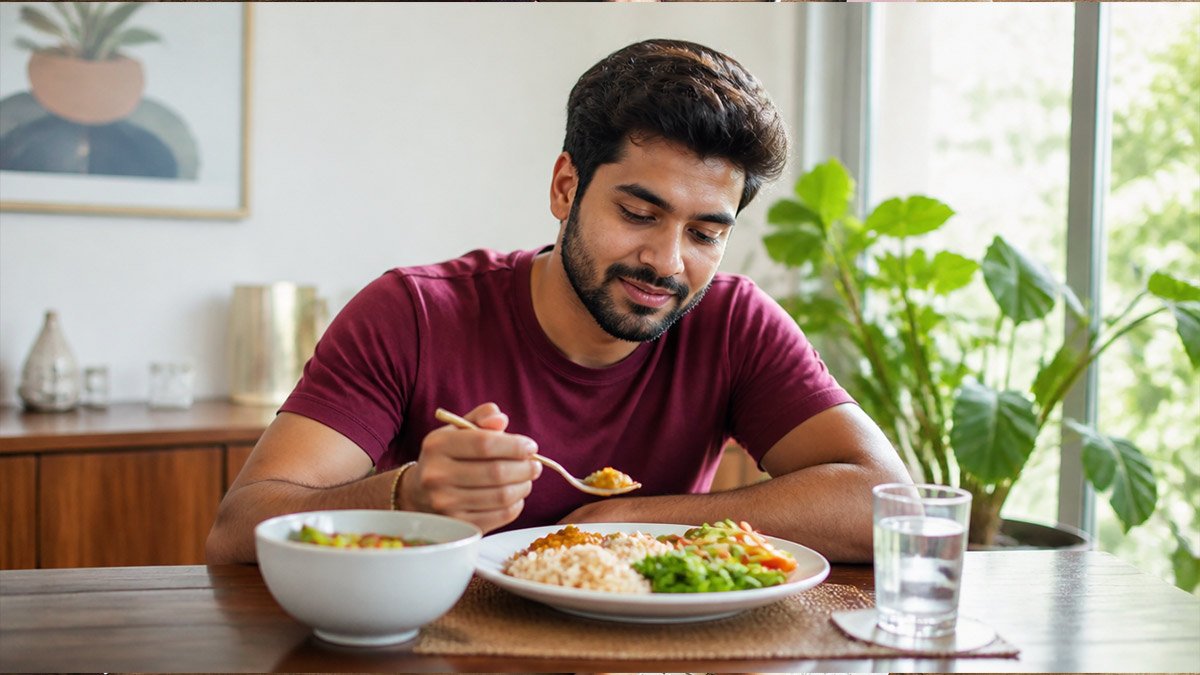
If every meal feels like a test, the plan may be too hard to live with
A diet can work on paper and still fail in real life if you spend every day thinking about what you are not allowed to eat.
Sustainable weight loss is less about finding the most restrictive plan and more about creating a pattern you can repeat while still enjoying normal meals, social occasions and a life outside the diet.
Build meals around what keeps you satisfied
A useful starting point is to make meals filling and nutritionally balanced: include a source of protein, vegetables or fruit, a sensible portion of carbohydrate and some dietary fat.
The exact portions depend on your needs and goals. The point is to reduce the feeling that every meal is a tiny punishment followed by hours of hunger.
Stop making individual foods morally good or bad
One dessert does not ruin a week. One salad does not make a diet healthy. What matters is the pattern over time.
Labelling foods as forbidden can make them more mentally powerful. A flexible approach allows occasional higher-calorie foods without turning them into a reason to abandon the entire plan.
Use hunger as information
If you are repeatedly extremely hungry, review the structure of the diet before blaming yourself. Meals that contain more protein, fibre and volume may be easier to sustain. Eating slowly and paying attention to fullness can also make portions easier to manage.
Plan for real life
A sustainable plan needs an answer for birthdays, restaurant meals, travel and busy workdays. You do not need a perfect meal every time. Decide what “good enough” looks like in those situations so one unexpected meal does not become a lost week.
Track trends, not punishment
If tracking helps you understand portions and patterns, use it. If it makes you anxious or overly rigid, consider a simpler method such as consistent meal structure and portion awareness.
Weight changes over weeks, not one meal. Use that longer view to judge whether the approach is working.
The real test
Ask yourself: “Could I eat this way six months from now without feeling trapped?” If the answer is no, the solution may not be more discipline. It may be a more flexible plan.