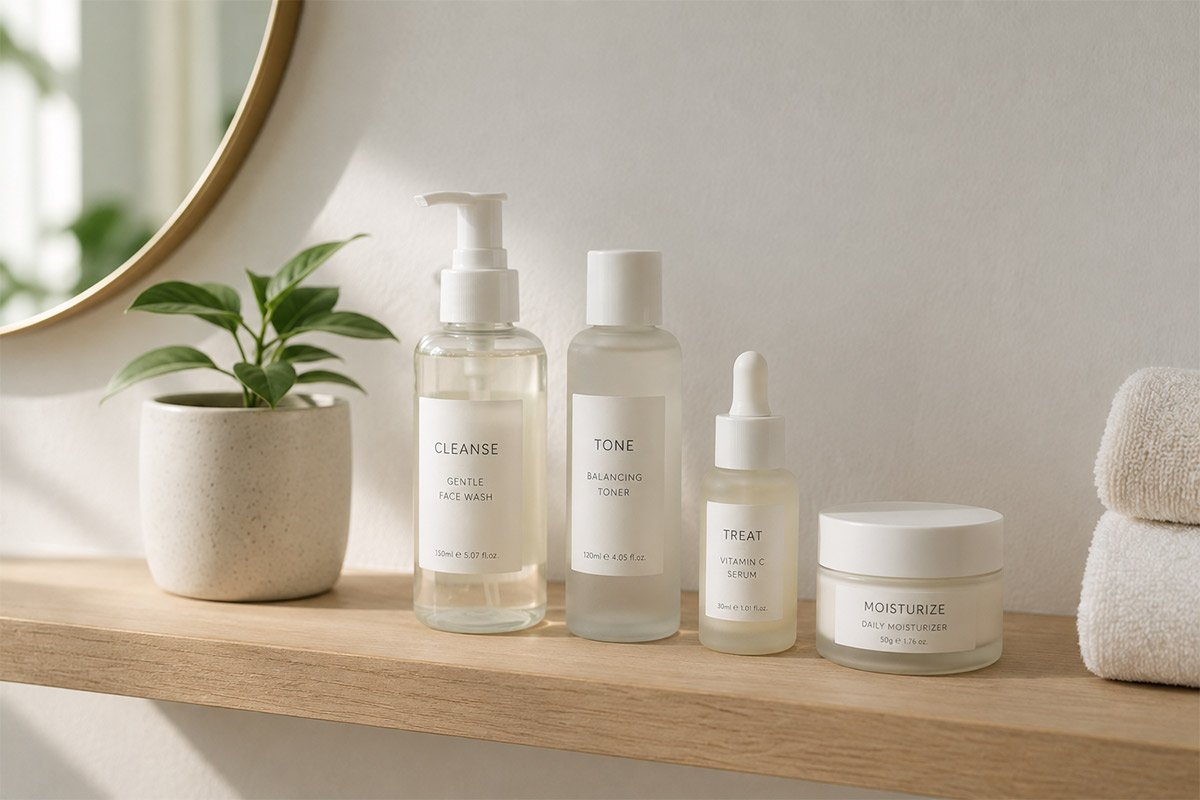


Start with less
Skincare marketing can make a simple routine feel incomplete. Cleanser, toner, essence, serum, ampoule, mask and several actives can quickly turn a five-minute routine into a chemistry project.
For most beginners, the better starting point is much simpler: clean the skin appropriately, moisturise when needed and protect exposed skin from UV radiation.
The basic routine
Cleanse:
Use a gentle cleanser suited to your skin. You do not need a harsh “squeaky clean” feeling.
Moisturise:
A moisturiser supports the skin barrier and can be useful even if your skin is oily; the texture can simply be lighter.
Protect:
Broad-spectrum sunscreen is the preventive step that earns a permanent place in most daytime routines.
Only add a treatment when you have a reason
A targeted product makes more sense when you can name the problem you are trying to address. Depending on the concern, that might be an acne treatment, retinoid, pigment-focused ingredient or another evidence-supported active.
Add one new active at a time. If you introduce several products together, you will not know which one helped—or which one irritated your skin.
Why simple routines fail
The usual problem is not that the routine is too simple. It is that it changes too often.
Switching products every few days makes results difficult to judge. Layering several strong actives can also cause irritation that gets mistaken for a new skin problem. Give a routine enough time to show a trend, unless a product is clearly causing a reaction.
The low-effort version
If a full routine feels impossible, make the habit smaller rather than abandoning it. A consistent morning sunscreen and an appropriate evening cleanse can be a more realistic foundation than a ten-step routine you follow for four days.
Then add moisturiser or a targeted treatment based on what your skin actually needs.
When a dermatologist is the better next step
Persistent acne, significant irritation, unusual pigmentation, painful rashes or a skin problem that is not improving deserves more than product experimentation. A dermatologist can distinguish between conditions that look similar but need different treatment.
Your shelf does not need to prove your commitment
Good skincare is not measured by the number of bottles in your bathroom. Build the smallest routine you can use consistently, then add only what has a clear job.