
If you’ve started a healthy habit, kept it going for a couple of weeks, and then quietly let it slip, you’re not alone — and you’re probably not doing anything unusual. Most people expect a new habit to feel automatic within about three weeks. In reality, that expectation is simply wrong, and it quietly sets almost everyone up to feel like they’ve failed before they’ve had a fair chance to succeed.
Key Takeaway: Habits genuinely take longer to form than popular advice suggests, and progress rarely moves in a smooth, steady line — so a slow start or a missed week isn’t a sign that something’s wrong with you.
The 21-Day Myth Everyone Believes
The idea that a habit takes 21 days to stick is everywhere — in fitness apps, self-help books, motivational posts. It sounds precise and reassuring, which is probably why it spread so widely. The problem is, it was never actually based on habit research at all; it came from an offhand observation in a decades-old book about a completely different topic.
The real number, based on tracking people building new daily habits over several months, is closer to 66 days on average — and that’s just an average. Some habits took as little as 18 days; others took the better part of a year. There’s no fixed finish line where a habit is “supposed” to click into place.
Why This Mismatch Messes With People So Much
When you expect a habit to feel easy after three weeks and it still feels effortful on day 25, it’s easy to read that as personal failure — “something’s wrong with me” — when it’s actually just a completely normal stretch of a process that typically takes over two months.
Habits are also doing a lot more work in your life than most people realize — some estimates suggest they drive close to 40% of what you do in an average day. That’s a lot of deeply grooved automatic behaviour for a two-week-old habit to compete against.
It’s Not Just Time — It’s How You Set the Habit Up
A few things consistently separate habits that stick from ones that quietly fade:
- A fixed, consistent trigger beats motivation. Attaching a new habit to something you already do without thinking — right after brushing your teeth, right after your morning coffee — builds automaticity faster than relying on remembering or “feeling like it.”
- Simple habits form faster than complicated ones. Something as small as drinking a glass of water becomes automatic much faster than a multi-step routine — complexity genuinely slows things down.
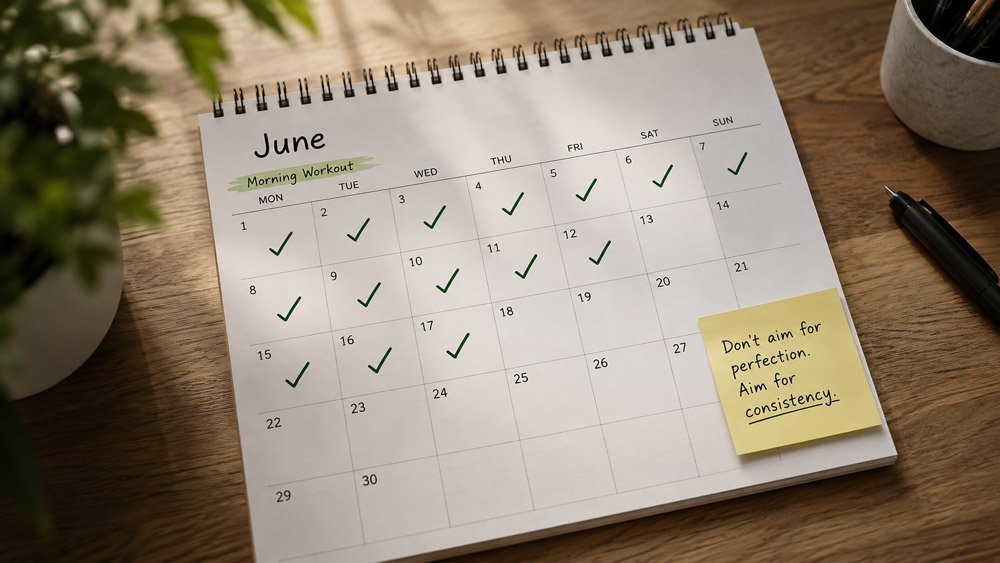
- A missed day matters less than it feels like in the moment. Occasional slip-ups don’t meaningfully derail the overall process — the habit-ending event is quitting, not skipping once.
Common Mistakes That Make Habits Feel Even Harder
- Starting with an ambitious, complicated version on day one, instead of the smallest version that could count.
- Quitting after a short streak breaks, treating one missed day as proof the whole thing failed.
- Expecting the habit to feel effortless within a few weeks, when two to three months is genuinely still early.
- Leaving the habit untethered to any consistent daily trigger.
Frequently Asked Questions
Will my habit definitely be automatic after 66 days?
Not necessarily — that’s an average, not a guarantee. Depending on the habit and the person, it can genuinely take considerably less or more time.
Does missing a day ruin my progress?
Generally no. Occasional missed days don’t meaningfully disrupt the overall path toward a habit becoming automatic.
Why do some habits feel easier to build than others?
Simpler behaviours with a clear, consistent trigger tend to become automatic noticeably faster than complex or inconsistent ones.
Conclusion
If a healthy habit has felt harder to maintain than expected, the problem probably isn’t you — it’s the unrealistic timeline most advice quietly assumes. Give a new habit a genuine two to three months, anchor it to something consistent you already do, and treat the occasional missed day as normal rather than a reason to start over.
This article is for general informational purposes and is not a substitute for personalized medical or behavioural advice.